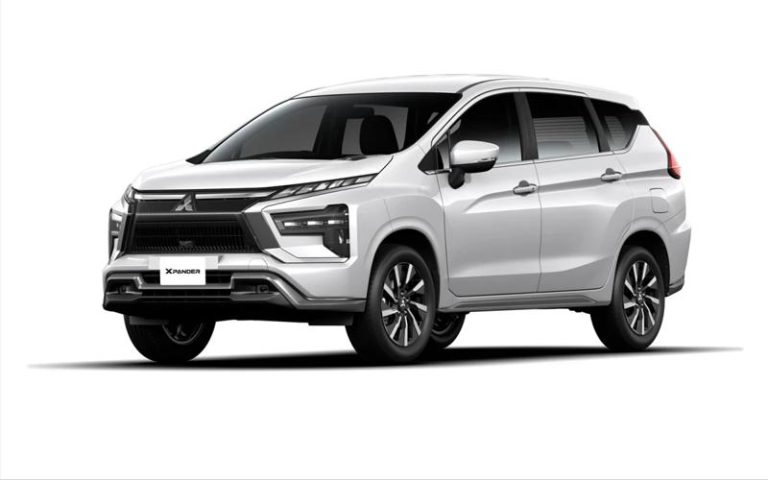
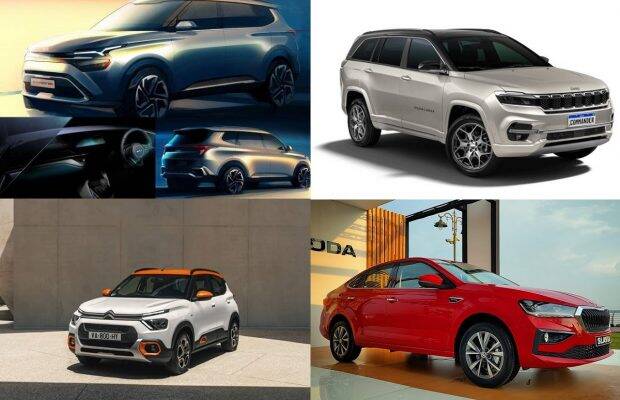
The automotive industry is in a period of accelerated metamorphosis. Electrification, digitalization, and shifting consumer expectations are converging to redefine what a modern vehicle represents. Against this backdrop, all new cars arriving on the market are not merely incremental updates; they are technological statements. They embody new philosophies of mobility, efficiency, and user experience that will shape the next decade of transportation.
This is a moment where design language, powertrain innovation, and intelligent systems evolve simultaneously. To understand where the industry is heading, it is essential to examine the latest models before they become commonplace on the road.
A New Era of Automotive Design
Design is no longer a superficial exercise. In all new cars, aesthetics are inseparable from function. Aerodynamics dictate form. Lighting systems communicate intent. Materials signal sustainability as much as luxury.
Manufacturers are moving away from aggressive excess and toward purposeful minimalism. Flush door handles, seamless body panels, and illuminated brand signatures are becoming standard. Interiors follow the same trajectory. Physical buttons are replaced by haptic surfaces and contextual interfaces, creating cabins that feel more like curated digital environments than mechanical cockpits.
This design evolution is not about novelty alone. It reduces drag, improves efficiency, and enhances user interaction in subtle yet consequential ways.
Powertrains Redefined
Perhaps the most profound shift in all new cars lies beneath the surface. The internal combustion engine, once the unquestioned centerpiece, is now sharing the stage with hybrid systems, plug in solutions, and fully electric architectures.
Electric vehicles are no longer niche products. They deliver instant torque, near silent operation, and simplified mechanical layouts. Meanwhile, advanced hybrids provide transitional solutions for markets not yet ready for full electrification.
What distinguishes modern powertrains is not just energy source diversity, but intelligence. Energy management systems optimize performance dynamically, balancing power delivery, efficiency, and longevity with algorithmic precision.
Software as the Core Architecture
In previous generations, software was an accessory. In all new cars, software is the architecture.
Over the air updates allow vehicles to evolve after purchase. Features improve. Interfaces refine. Performance parameters adjust. This fundamentally alters the ownership experience, transforming cars into upgradable platforms rather than static products.
Advanced driver assistance systems rely on complex software stacks integrating cameras, radar, lidar, and machine learning models. These systems continuously interpret the environment, reducing cognitive load on the driver and enhancing safety.
The result is a vehicle that is as much computational as mechanical.
Safety Beyond Passive Protection
Safety innovation in all new cars extends far beyond airbags and reinforced frames. Predictive safety is now a defining principle.
Vehicles anticipate hazards before they manifest. Adaptive cruise control responds to traffic patterns. Lane centering adjusts steering inputs proactively. Driver monitoring systems detect fatigue and distraction, prompting intervention when necessary.
This shift from reactive to anticipatory safety represents a paradigm change. The car becomes an active participant in risk mitigation rather than a passive shield.
Sustainability as a Design Mandate
Environmental responsibility is no longer confined to emissions figures. In all new cars, sustainability permeates the entire production and lifecycle process.
Manufacturers are adopting recycled composites, bio based plastics, and low impact manufacturing techniques. Supply chains are scrutinized. Battery sourcing is optimized for ethical and environmental considerations.
Even software contributes to sustainability. Route optimization reduces energy consumption. Eco modes adapt driving behavior subtly, nudging efficiency without compromising usability.
Sustainability is no longer a marketing claim. It is a structural requirement.
Connectivity and the Digital Ecosystem
Modern vehicles exist within a broader digital ecosystem. All new cars integrate seamlessly with personal devices, cloud services, and smart infrastructure.
Voice assistants understand natural language. Navigation systems incorporate real time data. Infotainment platforms support personalized profiles, ensuring continuity across vehicles and users.
This connectivity transforms the car into an extension of daily digital life. It blurs the boundary between mobility and information, creating experiences that are contextual, responsive, and deeply personalized.
Performance Reimagined
Performance is no longer measured solely by horsepower. In all new cars, performance encompasses responsiveness, efficiency, and control.
Electric drivetrains deliver linear acceleration without delay. Advanced suspension systems adapt in milliseconds to road conditions. Torque vectoring enhances cornering stability with mathematical accuracy.
Even traditionally utilitarian vehicles benefit from these advancements. The result is driving dynamics that feel intuitive and confidence inspiring, regardless of vehicle segment.
The Democratization of Premium Features
Features once reserved for luxury segments are rapidly becoming standard. All new cars often include technologies that were exclusive a decade ago.
Digital instrument clusters. Adaptive lighting. Advanced connectivity. Semi autonomous driving aids. These are no longer differentiators but expectations.
This democratization raises the baseline of quality across the market. Consumers benefit from higher standards, while manufacturers compete on refinement rather than mere inclusion.
Market Segments in Transformation
Every segment is evolving, but not uniformly.
Compact cars emphasize efficiency and urban adaptability. SUVs integrate electrification to balance size with responsibility. Performance vehicles explore electric propulsion without sacrificing emotion. Even commercial vehicles adopt connectivity and automation to enhance productivity.
Across segments, all new cars share a common trajectory toward intelligence, efficiency, and user centric design.
Ownership Experience and New Value Models
The concept of ownership itself is being redefined. Subscription features, software unlocks, and service based models are increasingly common in all new cars.
This creates flexible value propositions. Consumers pay for what they use. Vehicles adapt to changing needs over time. The relationship between driver and manufacturer becomes continuous rather than transactional.
While this model raises questions about long term cost and control, it undeniably reflects broader shifts in consumer behavior across industries.
Why Seeing Them Early Matters
Understanding all new cars before they saturate the market offers strategic insight. It reveals where manufacturers are investing. Which technologies are gaining traction. Which philosophies are shaping future mobility.
Early awareness empowers consumers to make informed decisions. It allows industry observers to identify trends before they become obvious. It provides context for evaluating not just individual models, but the direction of the entire automotive ecosystem.
All new cars represent more than fresh models. They are tangible expressions of an industry in transformation. Design becomes functional. Software becomes central. Sustainability becomes mandatory. Performance becomes multidimensional.
To see these vehicles early is to witness the future of mobility in its formative stage. Not as speculation, but as engineered reality. The road ahead is being defined now, one new car at a time.
About the Author